Inside UCLA's Human Virome Characterization Center
Interviews with PI Dr. Yvonne Hernandez-Kapila and data engineer Dr. Abasalt Bahrami
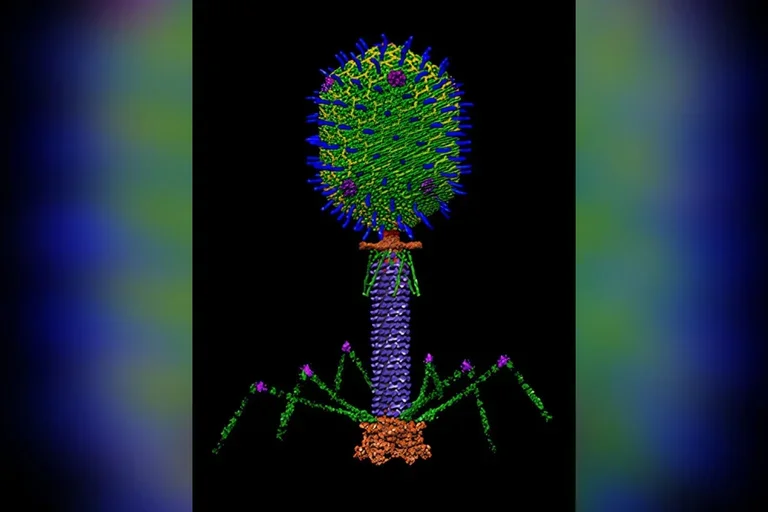
The June 2026 edition of the Human Virome Program Consortium Newsletter features interviews with UCLA's Human Virome Characterization Center (VCC) Principal Investigator, Dr. Yvonne Hernandez-Kapila, and Post-doctoral Data Scientist Dr. Abasalt Bahrami.
Now more than a year into the five-year, NIH-funded initiative, they share updates on efforts to map the human virome along the oral-gut-brain axis.
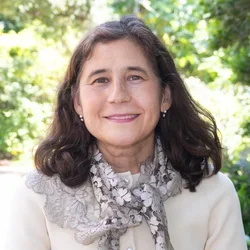
Yvonne Hernandez-Kapila, D.D.S., Ph.D.
How did you become interested in studying the virome?
Our work on the Microbiome of the Oral-Gut-Brain axis as relates to oral health and disease led me on the journey to better understand how the virome influences this body axis. The promise that the virome/microbiome could be a potentially important modifiable factor that influences oral and systemic health is exciting!
Could you briefly describe your group’s role in the Human Virome Project?
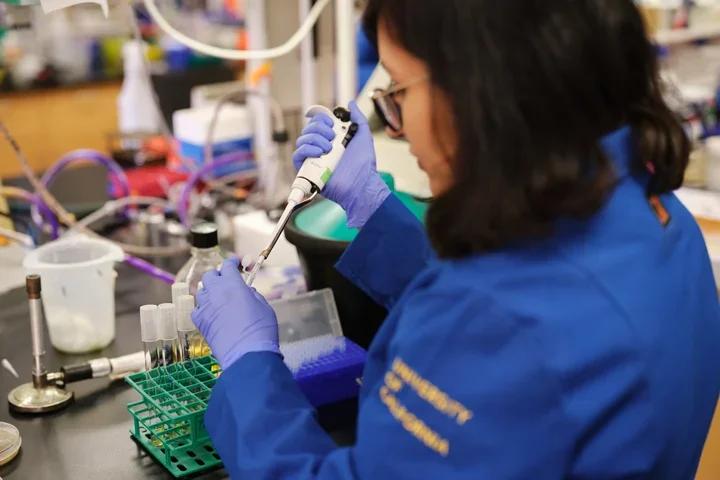
Our group leads the Human Virome Characterization Center for the Oral-Gut-Brain Axis, and as such, we are collecting and characterizing thousands of specimens across this body axis (and more, including tears, breastmilk, and deep organ tissues) from diverse cohorts and across the lifespan; we are also developing an understanding of the ELSI issues involved in this work.
What do you see as the most exciting or novel aspect of your project?
Spatial mapping of the virome across the whole body axis, including deep organ tissues, is exciting as it may show unique connections across the human body; and also using long-read sequencing to help identify novel viruses is an exciting undertaking that our group is involved with
Have you uncovered any surprising findings so far?
In our initial studies, we've discovered that sequencing approaches and platforms and storage solutions matter; these studies have been very informative, and we hope to share these findings with the broader scientific community in future publications so that other researchers can learn best approaches to study the human virome.
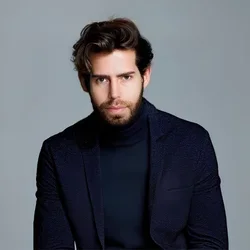
Abasalt Bahrami, Ph.D.
Could you briefly describe your role in the Human Virome Project?
I'm the data engineer; the person who makes sure data arrives where it needs to be, in a shape and structure that people can use. I move datasets between labs, wrangle them into order, and analyze what comes out. I also built our lab's custom sample-tracking system, so that every sample has a trail from arrival to result. If a dataset is lost, tangled, or homeless, it eventually finds its way to my desk.
What skills have you developed through this project that have been most valuable?
I trained as a quantum physicist, so my biggest leap has been translating that habit of thinking in systems and equations into the messy, living world of molecular biology. Beyond the science, building data analysis pipelines and a tracking system taught me to obsess over reproducibility, making sure that work done today still holds up, and makes sense, even years from now.
How do you hope your work will contribute to improving human health?
It’s exciting to be involved in the HVP and that I am helping to contribute to the success of this project. I have always enjoyed helping others and find scientific research to be very rewarding in that aspect. I hope I can help point a light somewhere for others, whether it be collaborating with other scientists or those who will be utilizing the data I have had a hand in curating.
What's the best piece of advice a mentor has given you?
To ask the simple question out loud, even when it feels too basic to voice. More often than not, the "obvious" question is the one that no one has actually answered, and chasing it down is where the interesting work begins.
Where's the most interesting place your work has taken you?
The route itself is the story. I grew up in Iran with big dreams, and the chase for science carried me through Brazil, Japan, Germany, and finally to Los Angeles. Each stop handed me a new lab, a new language barrier, and some of the sharpest minds I've ever worked beside.
What's a hobby or talent your colleagues might be surprised to learn about?
I quietly consider myself LA's best cook, a title I've awarded myself with full confidence and very little evidence! I also do magic, and a slow afternoon is all the excuse I need to pull out a trick or two; lucky for me, this team always plays along, which is exactly what makes it fun.
Photo credit: Victor Padilla-Sanchez, The Catholic University of America, via NIH Image Gallery