
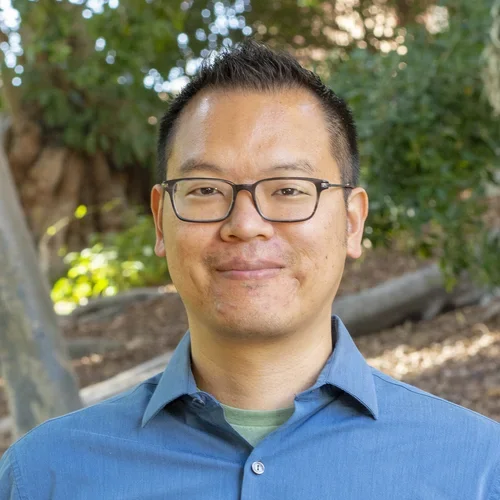
Jimmy Hu, PhD
Associate Professor
73-010 CHS
UCLA School of Dentistry
10833 Le Conte Ave
Los Angeles, CA 90095-1668
About
Dr. Hu is an associate professor in the Section of Biosystems and Function at the UCLA School of Dentistry. Dr. Hu has a long-standing interest in developmental and stem cell biology and has focused his research on understanding tissue morphogenesis and stem cell-based renewal. He received his PhD in Genetics at Harvard University and carried out his postdoctoral training at UCSF. He joined the UCLA School of Dentistry in 2019 and has continued to investigate how organs are shaped and renewed, using teeth and craniofacial structures as model systems.
Research & Interests
As an embryo develops and primordial organs begin to take shape, a confluence of biochemical and mechanical signals instructs constituent cells to organize into specific patterns and forms. The Hu lab seeks to understand how these signaling cues modulate cell behaviors and gene expression in order to generate correct tissue morphologies and cellular identities during development. The lab uses craniofacial structures as model systems, including the tooth and the mandible, and interrogates them via mouse genetics, live imaging, and biomechanical techniques in order to determine how mechanical forces and biochemical signals are generated and used to control different cellular processes and drive morphogenesis. Dr. Hu’s team has a particular interest in how mechanical forces are integrated with molecular signaling pathways and metabolic events, in order to modulate key developmental patterns, such as how tissues buckle or elongate.
In addition to the primary patterning of an organ during development, once an organ is formed it must also be maintained or repaired in order to function normally throughout the lifespan of the animal. Many of these processes are dependent on proper regulation of resident somatic stem cells, which, like progenitor cells in embryos, are under the control of biochemical, mechanical, and metabolic cues. The Hu lab studies how tissue architecture contributes to stem cell regulations, focusing on understanding the roles of cell density, adhesion, and arrangement in governing cell proliferation and differentiation.
Ultimately, the Hu lab aims to extract principal mechanisms of tissue morphogenesis and stem cell regulation from these experiments in order to design and develop strategies for regenerative medicine.
Education and Degree(s)
- B.Sc.(Hons), University of Auckland, New Zealand, 2003
- Ph.D., Harvard University, 2012
Publications
- Zhang Z*, Upadhyay S*, Luong C, Du W, Hu JK. (2025) Lats1/2 Differentially Modulate the Proliferative State of Dental Epithelial Progenitors and Ameloblasts in the Murine Incisor. Orthod. Craniofac. Res. PMCID: PMC12690751
- Du W*, Verma A*, Ye Q, Du W, Lin S, Yamanaka A, Klein OD, Hu JK. (2024) Myosin II mediates Shh signals to shape dental epithelia via control of cell adhesion and movement. PLOS Genetics 20(6): e1011326 PMCID: PMC11192418
- Shroff NP, Xu P, Kim S, Shelton ER, Gross BJ, Liu Y, Gomez CO, Ye Q, Drennon TY, Hu JK, Green JBA, Campàs O, Klein OD. (2024) Proliferation-driven mechanical compression induces signalling centre formation during mammalian organ development. Nat Cell Biol. 26:519–529 PMCID: PMC11482733.
- Ye Q, Bhojwani A, Hu JK. (2022) Understanding the development of oral epithelial organs through single cell transcriptomic analysis. Development 149 (16): dev200539 PMCID: PMC9481975
- Hu J.K., Du W., Shelton S., Oldham M., DiPersio C.M., Klein O.D. (2017) An FAK-YAP-mTOR signaling axis regulates stem cell-based tissue renewal in mice. Cell Stem Cell 21(1):91-106 PMCID: PMC5501749
Read all the publications:
Honors and Awards
- K99/R00 award from NIH NIDCR (2016)
- F32 award from NIH NIDCR (2013)
- The University of Auckland First Class Honours (2003)
Membership and Service
- Member of Society for Developmental Biology (SDB) (2009-present)
- Member of International Society for Stem Cell Research (ISSCR) (2013-present)
- Member of Society of Craniofacial Genetics and Developmental Biology (SCGDB) (2013-present)