Faculty at the Forefront
Five Innovators Driving Education and Patient Care
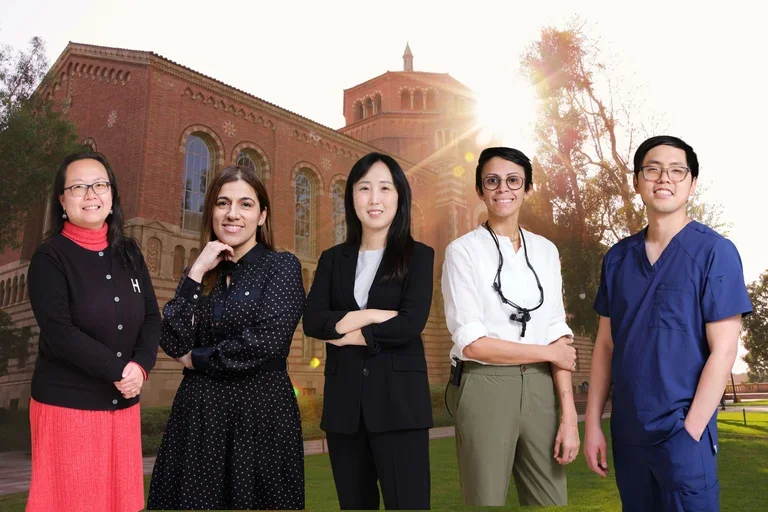
This story appears in the UCLA School of Dentistry's 2026 magazine
Read all content or
View interactive flipbook
Recruiting and developing ambitious early-career faculty members has long been a strategic priority for the UCLA School of Dentistry.
While distinguishing themselves in the field through grant-funded research, peer-reviewed publications, and participation in competitive career development programs, the School’s highly motivated educators never lose sight of the institutional mission: to train the next generation of oral health leaders.
Here are five faculty members whose work — in the lab, the classroom, the field, and the modern clinic — offers a snapshot of where dentistry is headed.
MEET THE INVESTIGATORS
For three straight years, UCLA faculty have been selected for the prestigious American Association for Dental, Oral, and Craniofacial Research’s (AADOCR) Mind the Future program. Mind the Future aims to develop a strong cadre of investigators addressing critical scientific challenges. The association selects cohorts of ten participants from multiple disciplines to receive multi-year funding, get matched with an eminent mentor, and enhance their research and teaching abilities. All three faculty members have enjoyed forming close bonds with their cohorts, networking, and interacting with accomplished scientists they would not normally have access to.
Insoon Chang, M.S. ‘09, D.D.S. ’13, Ph.D. ’17, assistant professor in the Section of Endodontics, recently completed the 2024-25 cohort cycle. Her mentor was Dr. Hatice Hasturk, D.D.S., Ph.D., a director of the Center for Clinical and Translational Research at the American Dental Association’s Forsyth Institute. Dr. Chang conducts basic, clinical, and translational research. Her work examines why people with poorly controlled Type 2 diabetes have trouble healing bone around their teeth after infection or dental treatment. She aims to understand the causes of this problem and develop better treatments to help these patients heal more effectively.
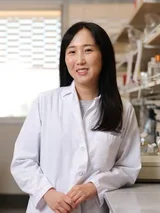
Dr. Chang has also contributed to research in dental pulp regeneration and the biological effects of endodontic sealers; her collaborative work in this area with UCLA’s Dr. Mo Kang and colleagues at South Korea’s Yonsei University was published in the Journal of Endodontics (2025 and 2026) and recognized by the ADA.
“Traditionally, pulp regeneration has relied on dental stem cells isolated from pulp tissue to promote regeneration,” she explained. “However, this approach presents significant logistical and technical challenges, as it requires specialized facilities to harvest tissue, isolate and expand stem cells, and subsequently reintroduce them. Our approach instead utilizes tissue grafting, offering a more practical and accessible alternative with promising results.”
In another early-career highlight, her peer-reviewed paper investigating the biological effects of endodontic sealers was selected as the cover article for Dentistry Journal Volume 14, Issue 3 (2026, MDPI). Dr. Chang’s research is conducted in tandem with a full range of educational responsibilities. She provides clinical instruction, teaches D2 endodontic techniques in the simulation lab, and chairs a summer “boot camp” course for students in the Professional Program for International Dentists. In her newly established laboratory, she mentors trainees, including visiting scholars from partner universities in Japan.
“UCLA gave me the opportunity to fulfill my dream, and Mind the Future allowed me to become more nationally recognized and start a new chapter,” she said.
Paula Ortega-Verdugo, D.D.S., M.S., Ph.D., assistant professor in the Section of Public and Population Health, was selected for the 2025-26 Mind the Future cohort. Dr. Ortega-Verdugo focuses on bringing prevention and minimally invasive dentistry to populations at high risk of caries, particularly low-income and uninsured populations.
“We know how the area in which you live affects your health through the lens of medicine, but we don’t have research demonstrating the effects on dental health,” explained the native of Santiago, Chile.
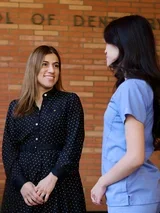
Dr. Ortega-Verdugo is working to identify local neighborhoods with a prevalence of these disparities in Los Angeles County; her long-term plan is to expand the geographic territory studied to the state and nationally. The goal is to recommend areas, and populations, most in need of interventions.
Dr. Ortega-Verdugo, who earned the AADOCR Procter & Gamble New Faculty Research Fellowship last year, teaches in the dental clinic and leads courses on professionalism and quality improvement in dentistry. In 2024, she helped restart UCLA’s chapter of the American Association of Public Health Dentistry, supporting this student research group and teaching a related selective course.
“Two of my dental research students were selected for the 2026 UCLA Dental Research Fellowship Program,” she noted.
“I’ve had wonderful mentors along my journey, including Drs. John Warren at the University of Iowa, Dr. Honghu Liu, our chair of UCLA Public and Population Health, and Dr. Francisco Ramos-Gomez, who chairs UCLA Pediatric Dentistry, so that’s something I want to pay forward.”
Yan Wang, M.S. ’10, Ph.D. ’19, is an adjunct assistant professor in the Section of Public and Population Health. She was the first faculty member to be selected for Mind the Future, participating in the 2023–24 cohort. Her research focuses on the development of the oral microbiome in mothers and younger children, particularly from the prenatal stage through age five.
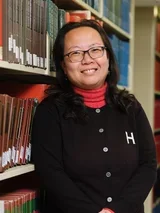
Supported by NIH postdoctoral training grants, in 2020 Dr. Wang expanded her work into global oral health. Projects investigate the longitudinal oral microbiome of Kenyan children at age three to five, comparing those living with HIV, those exposed to HIV, and their healthy peers.
“I want to understand how the oral microbiome develops in the early stage of life and how it shapes health outcomes later, not only in oral health, but also in physical development, systemic health, and cognitive function,” said Dr. Wang.
In addition, Dr. Wang mentors three first-year UCLA D.D.S. students in the School’s Dental Research Fellowship Program.
“Every achievement I have is built upon the guidance and support of my incredible mentors. I feel a deep responsibility to carry that forward, to support the next generation and strengthen our research community.”
Two years removed from her AADOCR experience, Dr. Wang continues to meet bi-weekly with her Mind the Future mentor, University of Iowa College of Dentistry Professor Dr. David Drake. Their discussions range from career development to NIH grant management to work-life balance to grant writing in her Analytical and Translational Oral Microbiome (ATOM) lab.
Dr. Wang currently serves as President of AADOCR Southern California Section, organizing its inaugural symposium at UCLA last year, which brought together researchers from the area’s four dental schools and other regional peers.
MEET THE TECHNOLOGISTS
Shahed Al Khalifah, B.D.S., M.S. ’16, and Denny S. Chao, D.M.D., co-direct the School’s Innovative Digital Dentistry Systems (iDDS). Established in 2018 with generous funding and the vision of Dean Paul H. Krebsbach, iDDS prepares students for a rapidly advancing profession by integrating technologies like 3D printing and virtual reality into the School’s curriculum.
Dr. Al Khalifah – an associate clinical professor in the Section of Restorative Dentistry who was recently installed as the Alumni and Friends Presidential Endowed Chair – chairs D2, D3, and D4 clinical courses. Dr. Chao, an associate clinical professor, serves as associate director of the postgraduate residency program in advanced prosthodontics.
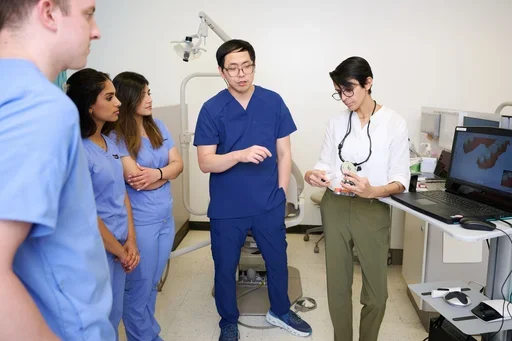
As early-career clinical educators, students often find it easy to connect with both; Dr. Al Khalifah was voted by the 2025 D.D.S. graduating class to participate in its doctoral hooding ceremony, while Dr. Chao recently accompanied a group of ten D3s on an educational and cultural exchange trip to Japan.
One of the ways digital tools enhance teaching and patient care, Dr. Al Khalifah explained, is by allowing dentists to deliver treatment faster.
“Rather than waiting weeks for the lab to create a restoration, we are increasingly capable of delivering treatment the same day. We can scan the tooth, design it, print it, or mill it, and deliver in a single day.”
When learning how to prepare a tooth, students can use scanning and software for magnified views and to compare against ideal preparations.
“They’re exposed to the whole process, including designing the tooth and understanding the anatomy and occlusion of the tooth.”
“Digital technology is rapidly evolving, and I believe dentistry will be mostly digital in the future,” Dr. Chao said. “In the meantime, we want to incorporate new technology on a larger scale where it makes sense and where it makes things better and more efficient. So the first step is to research and validate.”
“3D printing is constantly evolving, and materials continue to improve, but it does not yet rival milling. We aim to expose students to as many digital dentistry tools as possible; however, even as we teach these technologies, we are simultaneously evaluating their effectiveness.”
Drs. Al Khalifah and Chao believe iDDS benefits from their perspectives as co-directors hailing from different specialties within the School.
“We wanted digital to be a separate unit that, rather than being under one section, serves the entire School of Dentistry,” Dr. Al Khalifah said.