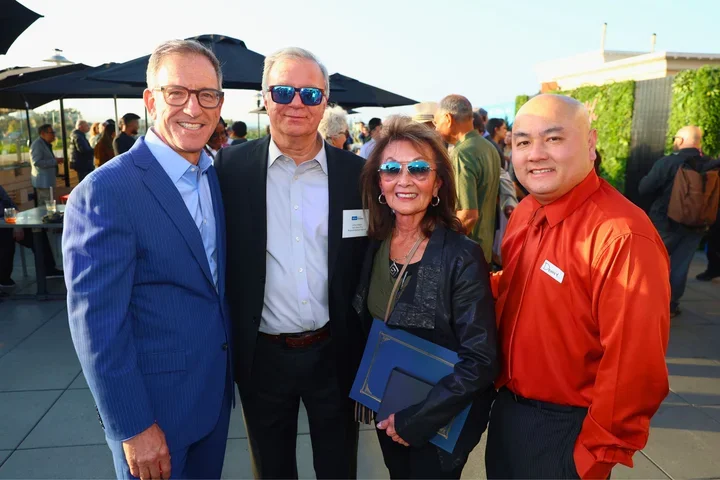
Shared Governance in Action
The Student-Faculty Liaison Committee’s role in advancing the D.D.S. experience
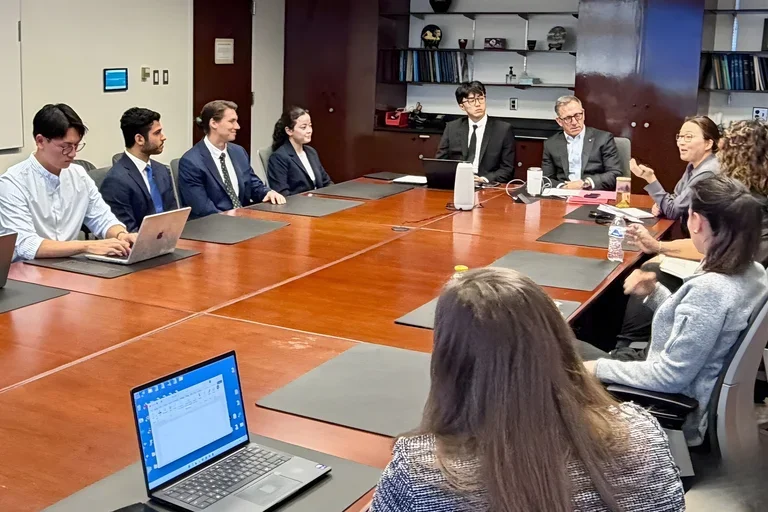
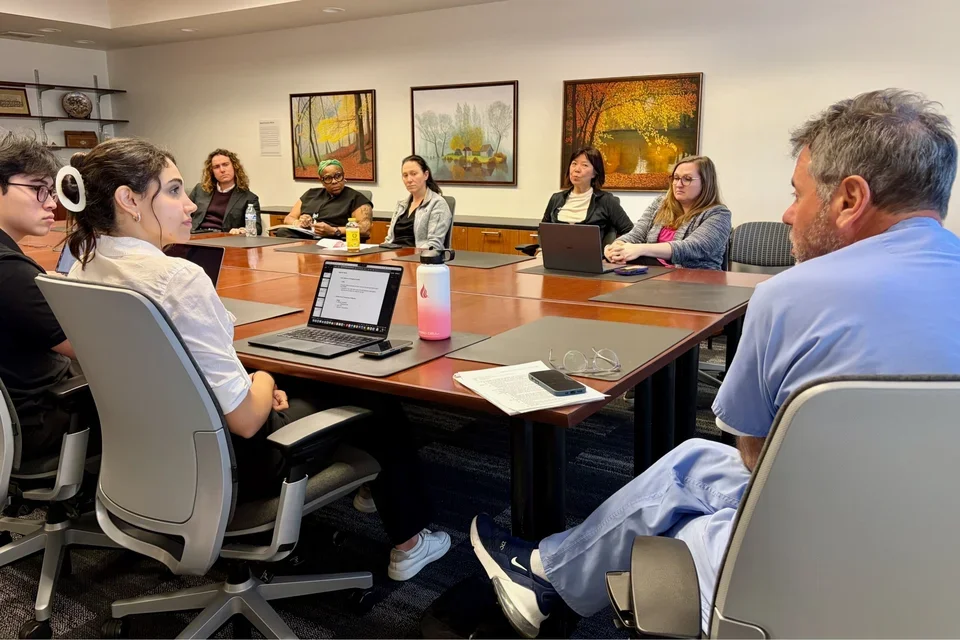
Each academic quarter, UCLA School of Dentistry student leaders trade scrubs for business suits and gather in the fifth-floor Ellison Boardroom to advocate not only for their own educational experience, but for future Bruin D.D.S. cohorts.
The Student-Faculty Liaison Committee (SFLC) gives these student body representatives a literal “seat at the table” alongside Dean Paul Krebsbach, members of his senior leadership team, and other decision-makers from the School’s academic and clinical operations. Dean Krebsbach co-chairs the Committee with the standing Associate Student Body president, a position currently held by Nathan Kang, D.D.S. ’27.
“Through SFLC, student leaders aim to create a consistent, honest channel where student voices directly inform decisions that impact our education, clinic experience, and overall well-being,” said Kang. “Our goal is to identify issues early, propose practical solutions, and build a culture of transparency, trust, and shared accountability within the dental school.”
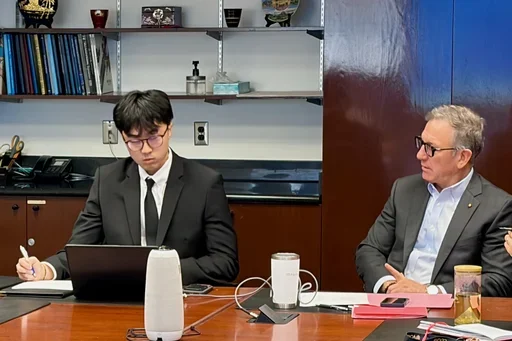
Kang is joined at SFLC by his ASB Cabinet members and the four D.D.S. class presidents. During their final meeting of 2025, the focus was primarily on enhancing clinic workflows. One of those brought a rousing cheer from the room; Central Services Supervisor Tamesha Fields announced expanded dental storeroom hours to relieve supply bottlenecks around the midday clinic closure.
Such “wins” for the student body are only as strong as the communication that accompanies them.
“After every major SLFC meeting, I email minutes to the whole school. We [student leaders] communicate SFLC updates through multiple avenues to ensure clarity and accessibility, including class president briefings, ASB announcements, and follow-up emails or Slack posts when workflow changes affect clinic or academics,” said Kang.
“When needed, we also share concise summaries or FAQs so students understand not just what is changing, but why it’s changing and how it impacts them,” he added.
Reciprocally, there are mechanisms for ideas, questions, and concerns to filter up from the student body to SFLC. These include quarterly meetings held by each of the four class presidents, plus monthly discussions between ASB leadership, Associate Dean of Clinical Operations Dr. Paulo Camargo, and General Clinic Director Dr. Sean Mong to ensure this critical component of dental student training is continuously being optimized.
Dean Krebsbach is proud to carry on this tradition of faculty-student dialogue, first formalized by the School’s Faculty Executive Committee in the late 1980s. One practice he introduced was a standing pre-SFLC meeting with the ASB president to align on priorities and set the agenda. Over the past five years, key outcomes from the Committee’s work have included:
- Standardized final exam scheduling to reduce conflicts and compressed testing periods
- Earlier syllabus release, clearer grading expectations, and fewer mid-term changes
- Increased the number of Nomad X-ray units available to students in each group practice
- Streamlined patient screening and scheduling to increase clinic capacity, improving students’ ability to meet graduation requirements efficiently
“An important responsibility for any dean is to be responsive to the needs of your community,” Dean Krebsbach said. “D.D.S. students are both our largest constituency and the future of the profession, making shared governance with them essential.”
SFLC also fosters student self-governance. Following a request from the D3 class cabinet, at the December meeting, ASB Vice Presidents Nora Ayache and Johnny Thai, D.D.S. ’27, presented a proposal to ensure equitable use of training opportunities on Endodontic mannequins, including sanctions for missed booking times.
Kang believes the experience of navigating complex – and sometimes difficult – conversations prepares student leaders for their future roles in the profession.
“SFLC provides early, hands-on experience in advocacy, collaboration, and systems-level thinking that mirrors real-world leadership in dentistry,” he shared. “By learning how to communicate across stakeholders, navigate institutional constraints, and turn student concerns into actionable change, we become more effective, empathetic, and accountable leaders for our future teams, patients, and profession.”